
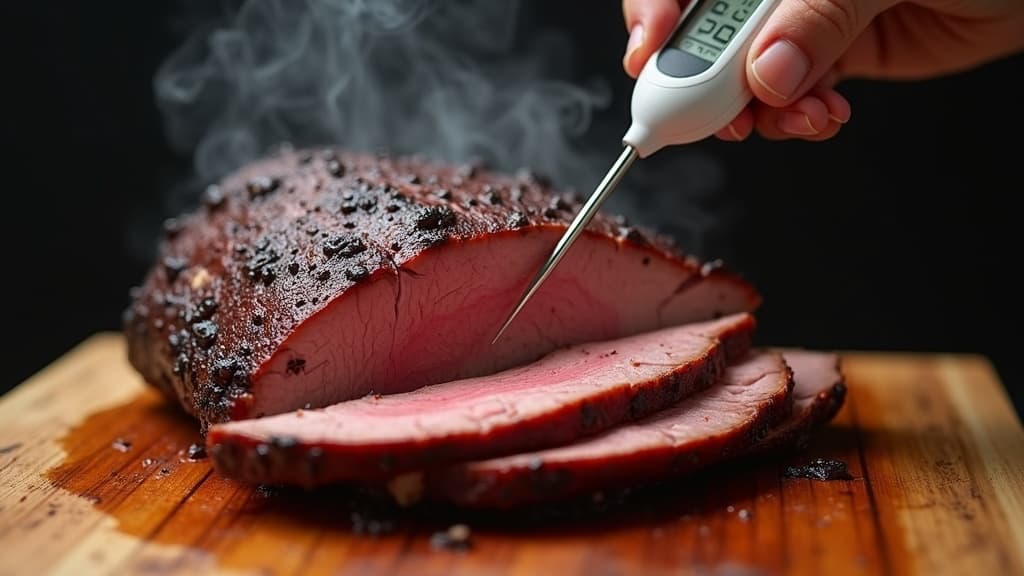
The single most important tool in outdoor cooking isn't your grill. It's your thermometer.
Color, touch, and timing are unreliable. Internal temperature is the only way to know your meat is safe to eat AND cooked to the doneness you want.
Beef
| Doneness | Internal Temp | Description |
|---|---|---|
| Rare | 120-125°F | Cool red center |
| Medium Rare | 130-135°F | Warm red center |
| Medium | 135-145°F | Warm pink center |
| Medium Well | 145-155°F | Slightly pink |
| Well Done | 155°F+ | No pink |
| Ground Beef | 160°F | USDA minimum for safety |
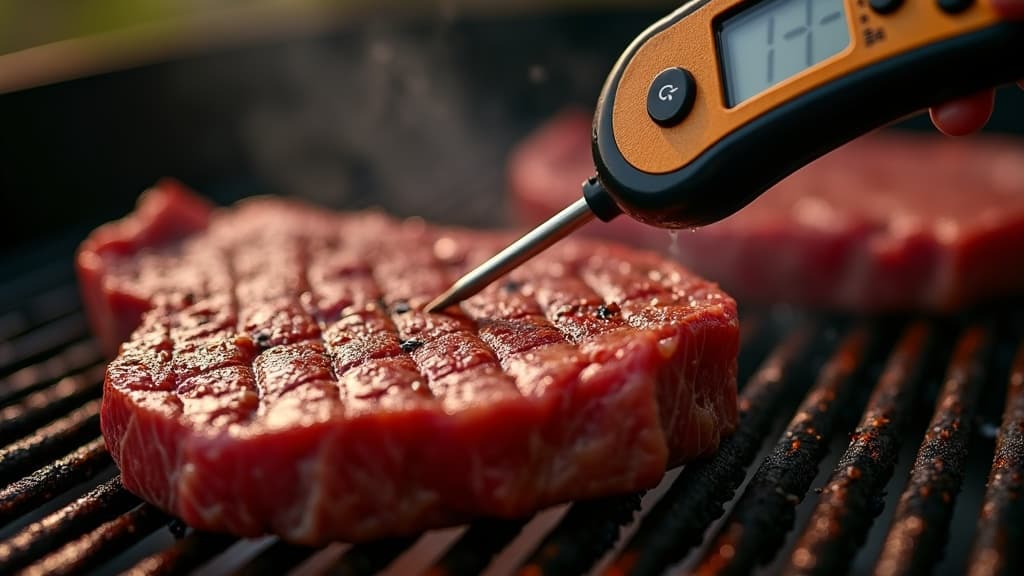
**For steaks:** Pull 5°F before your target — carryover cooking will bring it up during rest.
Pork
| Cut | Internal Temp | Notes |
|---|---|---|
| Chops & Tenderloin | 145°F | USDA updated this from 160°F in 2011 |
| Ground Pork | 160°F | Higher temp for ground meats |
| Pulled Pork | 195-205°F | Collagen breaks down, meat shreds easily |
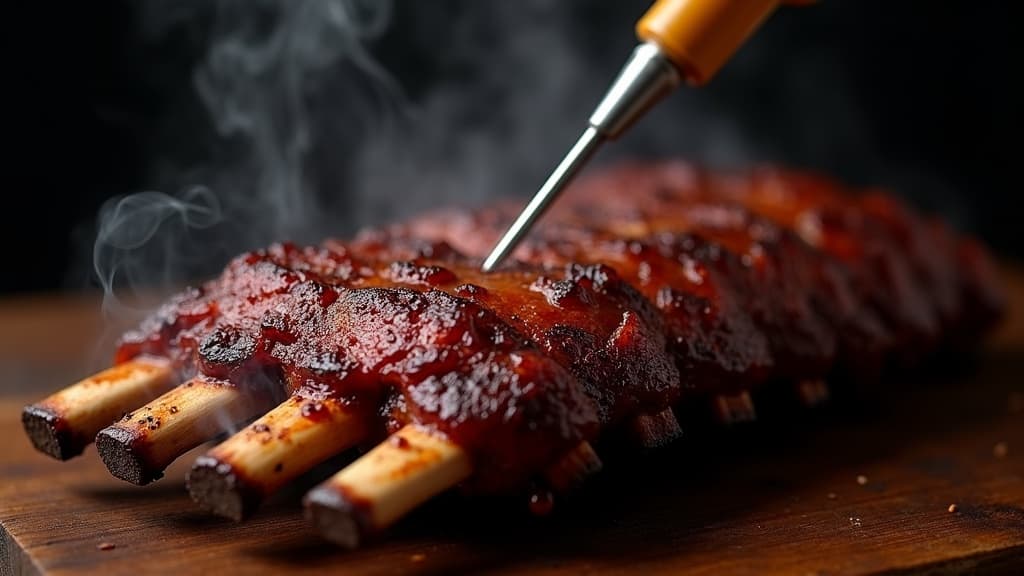
| Ribs (fall-off-bone) | 195-203°F | Probe should slide in like butter |
Chicken & Turkey
| Cut | Internal Temp | Notes |
|---|---|---|
| All Chicken | 165°F | Non-negotiable for food safety |
| All Turkey | 165°F | Check thigh (thickest part) |
| Ground Poultry | 165°F | Same as whole cuts |
**No pink test:** Unlike beef, there's no safe "medium" for poultry. 165°F every time.
Fish
| Type | Internal Temp | Notes |
|---|---|---|
| Salmon | 125-130°F | For medium (slightly translucent center) |
| Tuna (seared) | 115°F | For rare center |
| White Fish | 140-145°F | Flakes easily with a fork |
| Shrimp | 120°F | Opaque and pink |
Lamb
| Doneness | Internal Temp |
|---|---|
| Rare | 120-125°F |
| Medium Rare | 130-135°F |
| Medium | 140-145°F |
| Well Done | 155°F+ |
Tips for Accurate Readings
- . **Insert the probe into the thickest part** of the meat, away from bone (bone conducts heat and gives a false high reading).
- . **Don't touch the grill grate** with the probe — it reads the grate temperature, not the meat.
- . **Check multiple spots** on large cuts like brisket or turkey.
- . **Account for carryover cooking** — meat continues to cook 5-10°F after you pull it off the grill.
- . **A wireless thermometer lets you monitor without opening the lid.** Every time you open the lid, you lose heat and add cook time.
Print This Chart
Seriously — print this page, laminate it, and stick it on your fridge or inside your grill cabinet. You'll reference it every time you cook until the temperatures become second nature.